

Why should we have an intranet?
*These days, intranets are so much more than just a document management system. Today, the intranet can be a fantastic tool for collaboration and communication - both between individuals and between management and employees. A tool that leads to results. *
In this article we go over where the concept comes from and what intranets are today.
Once upon a time, an intranet consisted of just a web page with links to other systems. Optionally, it included a document structure and some news from management that it wanted to communicate down the organization.
Over time, search functions began to become more in demand, intranets began to become more tools for employees than pure information sites.
Many of us remember when “Social Intranets” were what everyone was talking about. It was time to focus on communication (I don’t even want to try my hand at guessing how much money was spent in the search for the holy grail - the solution that got all employees actively engaged on the “social intranet”. Some succeeded, we know that, but how did it go for the large crowd?).
So in 2019, everyone is talking the same way about “AI” and “machine learning,” cool and potentially world-changing technologies — but let’s not forget that many are still grappling with the same problems as in the early 2000s.
Digitalization has not hit everywhere. Many users still ask themselves the question “Where to find information about X?” or “How do I implement process/work moment Y correctly?”
A McKinsey/IDC study that (for some reason) recurs in some form time and time again in articles about the “digital workplace”, “social economies” and other things related to the field has some interesting numbers. However, note that the data is from 2012, a lot has probably happened.
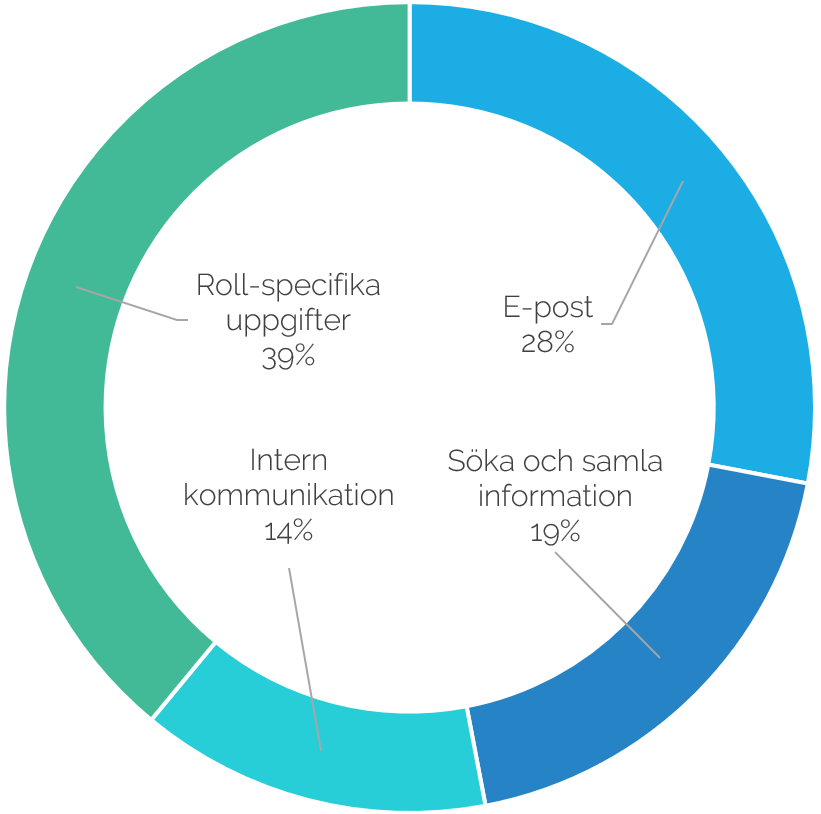 *Figure 1 -Figures from “The social economy: Unlocking value and productivity through social technologies” *www.mckinsey.com/industries/high-tech/our-insights/the-social-economy
Quality deficiency costs or quality maintenance costs
If we are to believe this data, a well-functioning intranet that manages to make available would the right information unto the right person at the right time Enabling employees to find, create or share information in the right way can cut off a huge number of hours of work.
These costs are commonly known as quality deficiency costs.
This means, of course, that investments made to meet these things must be seen as quality maintenance costs.
An interesting thing about these terms is that it is much more expensive to invest in quality after that something has gone wrong or anomalies have been detected — it goes without saying that it will be more efficient to counteracting that the discrepancies ever occur.
But where do we put the cost? The profit and loss account? The balance sheet? What happens when we see it as a capital expenditure? Can a single investment at a time really continuously be enough to balance between maintenance of and lack of quality?
Intranets that act as a hub that brings together management information, collaboration tools and collaboration spaces together with internal communication is, in our opinion, a highly topical area and something that will only grow in the future.
An absolute requirement
For many companies, the need for modern solutions that enable the “digital workplace” where you can work regardless of where you are, what device you are on or the people you need to work with is no longer something that can be chosen. It is an absolute requirement.
The key now is to be able to quickly reset. The time when we could take 1.2 (Source: Nielsen Normal Group) years to implement a winning intranet is past. We need to be able to get up the track quickly and follow our changing world.
We at Cognit do this by providing various packaged solutions based on standardisation, best practice and customisation. It may sound like a contradiction until we consider that what we customise are structures and control models — not primarily technical functions. When we implement process automations, it often involves things that can be on the track in weeks, or even days — or in the best of cases — hours or minutes.
These days, intranets are so much more than just a document management system, as it was from the beginning. Today, the intranet can be a fantastic tool for collaboration and communication - both between individuals and between management and employees. A tool that leads to results.
The question “Why?” must always be answered
Before an intranet/internal communication/management system introduction/certification/digital workplace project, the question always has to be “What are the goals we want to continuously improve towards?” is answered.
The intranet must have a purpose in order to be used and deliver benefits to the organization.
Take the habit of regularly asking the question “Why?” even when the solutions are up and rolling.
Perhaps it is possible to add a subset of the desired features that would make it easier for employees to start having effects quickly? Or remove features and information that are not used?
How much would you make by “hitting the ground running” with a standardized solution you can grow in?